
PU Leather vs. Microfiber Leather: Which One Is Right for Your Bags?
Cost, durability, hydrolysis resistance, and customization — a practical guide for bag brands

MINGKE — PU Leather vs. Microfiber Leather: material structure, performance and selection for bag manufacturing
PU leather and microfiber leather are the two most common synthetic leather options for bag manufacturing. They differ in structure, durability, cost, and performance. Understanding these differences helps you match the material to your product positioning, quality standards, and budget.
What Is PU Leather?
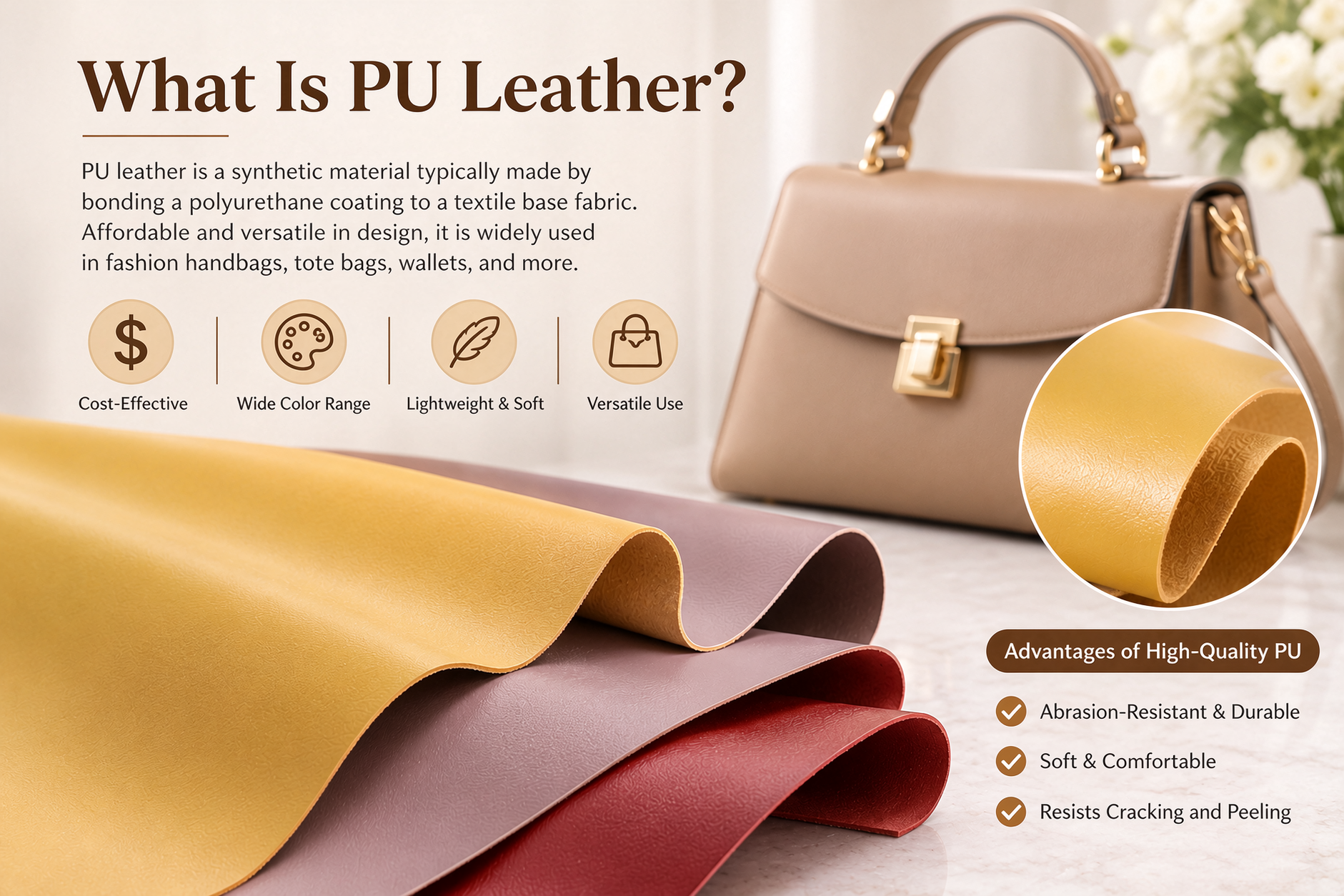
PU leather for bags — cost-effective, wide color range, soft and lightweight
PU leather is a synthetic material made by bonding a polyurethane coating to a textile backing. Its low cost and design flexibility make it a staple in fashion handbags, totes, wallets, and accessories.
Key advantages:
Generally lower cost
Wide range of colors and textures
Soft, lightweight hand feel
Ideal for fashion bags and everyday handbags
Caveat: Low-grade PU can crack or peel under repeated flexing or in hot, humid conditions. High-quality PU formulations reduce this risk — grade matters when sourcing.
What Is Microfiber Leather?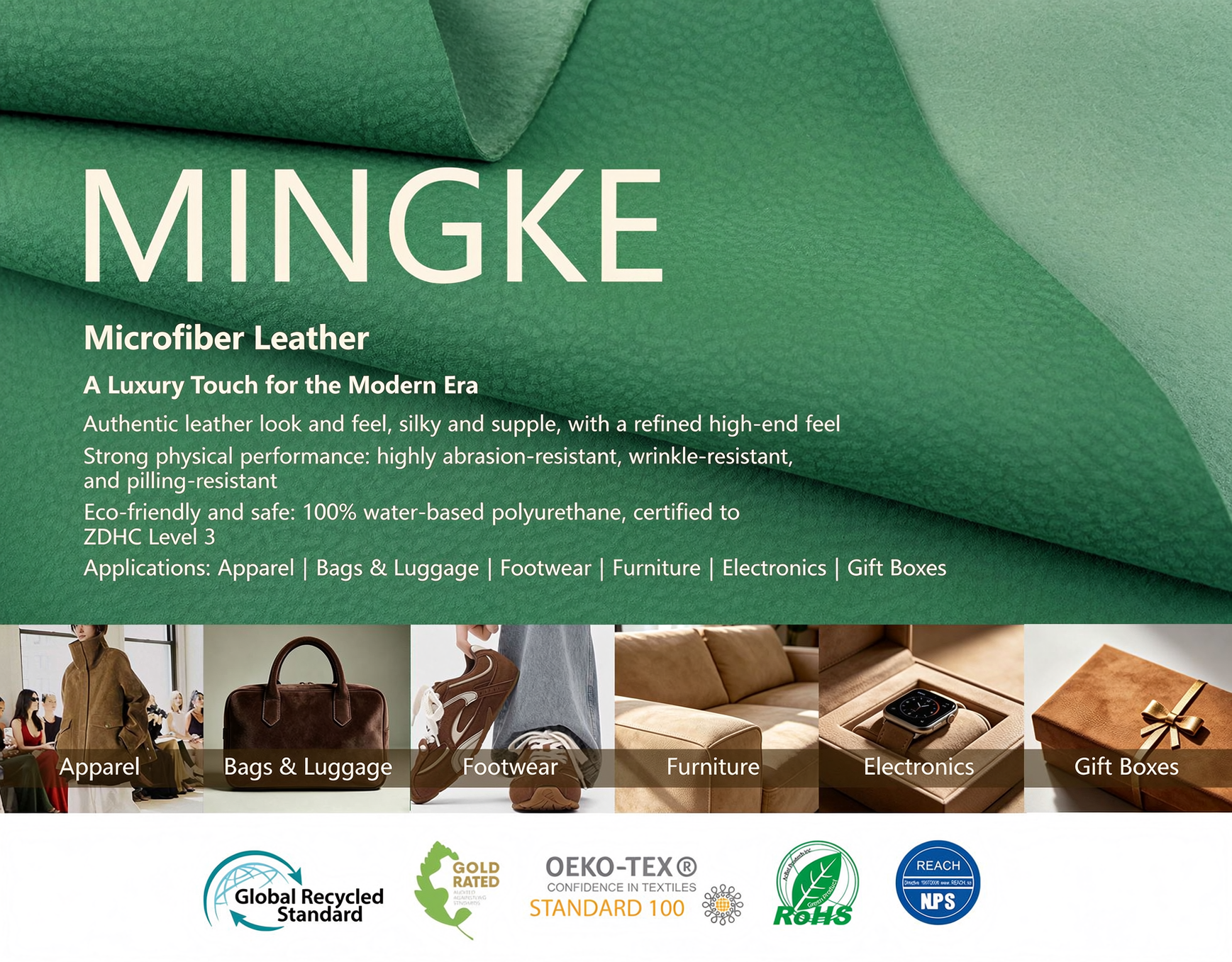
MINGKE microfiber leather — realistic leather feel, high abrasion and crease resistance, 100% water-based PU
Microfiber leather is a high-performance material made from ultra-fine fibers and a polyurethane system. Its fiber base mimics the collagen structure of genuine leather, delivering tear strength, flexibility, and a leather-like touch.
Key advantages:
Higher tear and tensile strength
Excellent flexibility and shape retention
Premium, genuine-leather-like look and feel
Suited to mid-to-high-end bags and high-use parts
Microfiber leather costs more than standard PU, but for bags that demand long-term durability, its stability often makes it the better value over the product's life.
Key Differences: PU Leather vs. Microfiber Leather
| Criteria | PU Leather | Microfiber Leather |
|---|---|---|
Cost | Generally lower | Generally higher |
Durability | Grade-dependent; low grades may peel or crack | Engineered for high-strength use; more stable |
Hydrolysis / aging resistance | Low grades prone to hydrolysis; premium PU improved | Generally superior |
Surface finish | Wide range of textures | Premium, leather-like finish |
Flexibility | Varies by grade | Generally good |
Customization | Colors, textures, thickness, backing | Colors, textures, thickness, backing |
Best for | Fashion bags, everyday handbags | Mid-to-high-end, structured, performance bags |
Actual performance depends on the specific material structure, formulation, and test results.
How Should Bag Manufacturers Choose?
Choose PU leather for fashion handbags and cost-sensitive lines. It balances price, appearance, and design flexibility, with fast turnaround on new colors — ideal for seasonal and trend-driven bags.
Choose microfiber leather for mid-to-high-end handbags, structured bags, and parts requiring high mechanical strength or long service life.
Whichever you choose, check abrasion resistance, flex resistance, hydrolysis resistance, thickness, and the overall bag construction. Request samples and test under real-use conditions.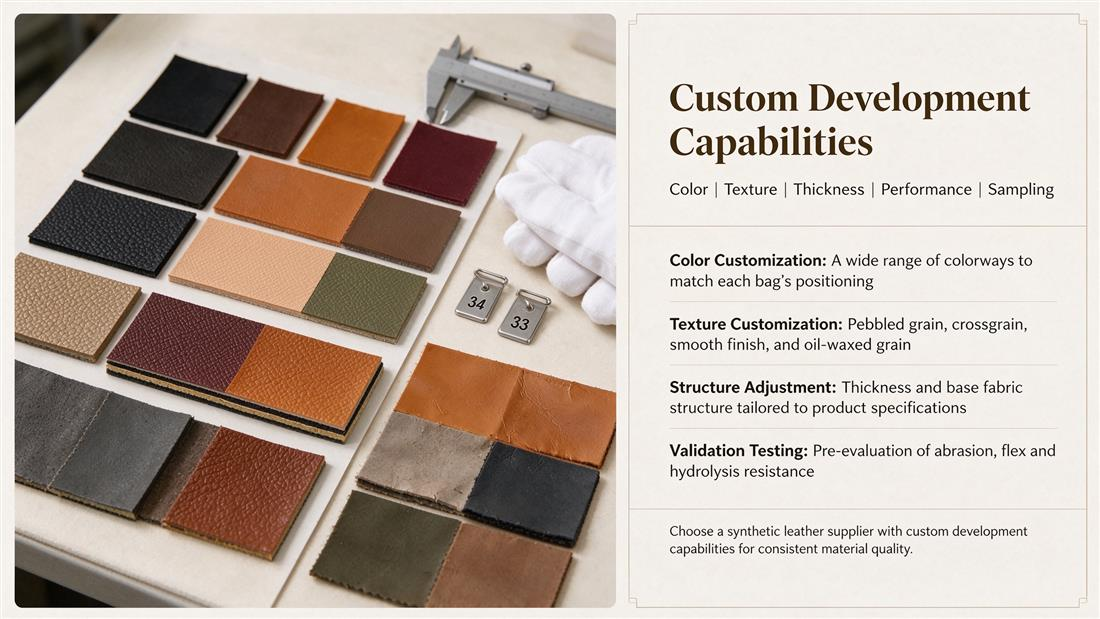
Customization Options
Both materials can be customized to your design. Common options:
Custom colors and surface textures (pebbled, cross grain, smooth, oil-wax)
Different thicknesses and backing structures
Performance tuning for abrasion, hydrolysis resistance, and hand feel
Partnering with a supplier that offers in-house development helps ensure consistent quality and differentiated products.
In short: PU suits cost-driven, design-led bags; microfiber suits products needing strength, premium feel, and durability. The right choice depends on brand positioning, use case, quality standards, and budget.
Contact MINGKE
Need custom synthetic leather for bag manufacturing? Talk to our team about material selection and sampling for colors, textures, thicknesses, and performance.
Tel: +86-20-84646188 | Fax: +86-20-84640082
WhatsApp / WeChat: +86 18102687893 | Email: mingkenewmaterial@gmail.com
Website: https://www.mingke.ltd
Address: Tower 2, Building 1, 1003 Asian Games Ave., Shiqi, Panyu Dist., Guangzhou 511450, P.R. China
About Mingke

Founded in 2002, Mingke supplies synthetic PU-based materials worldwide for handbags, furniture, footwear, apparel, and electronics. Backed by a complete supply chain, strict quality control, and efficient logistics, we deliver reliable quality and service.
We also provide functional materials, bio-based materials, GRS-certified recycled materials, textiles, and plant-fiber-based materials to international brands.
Bio-Based & Full-Range Materials
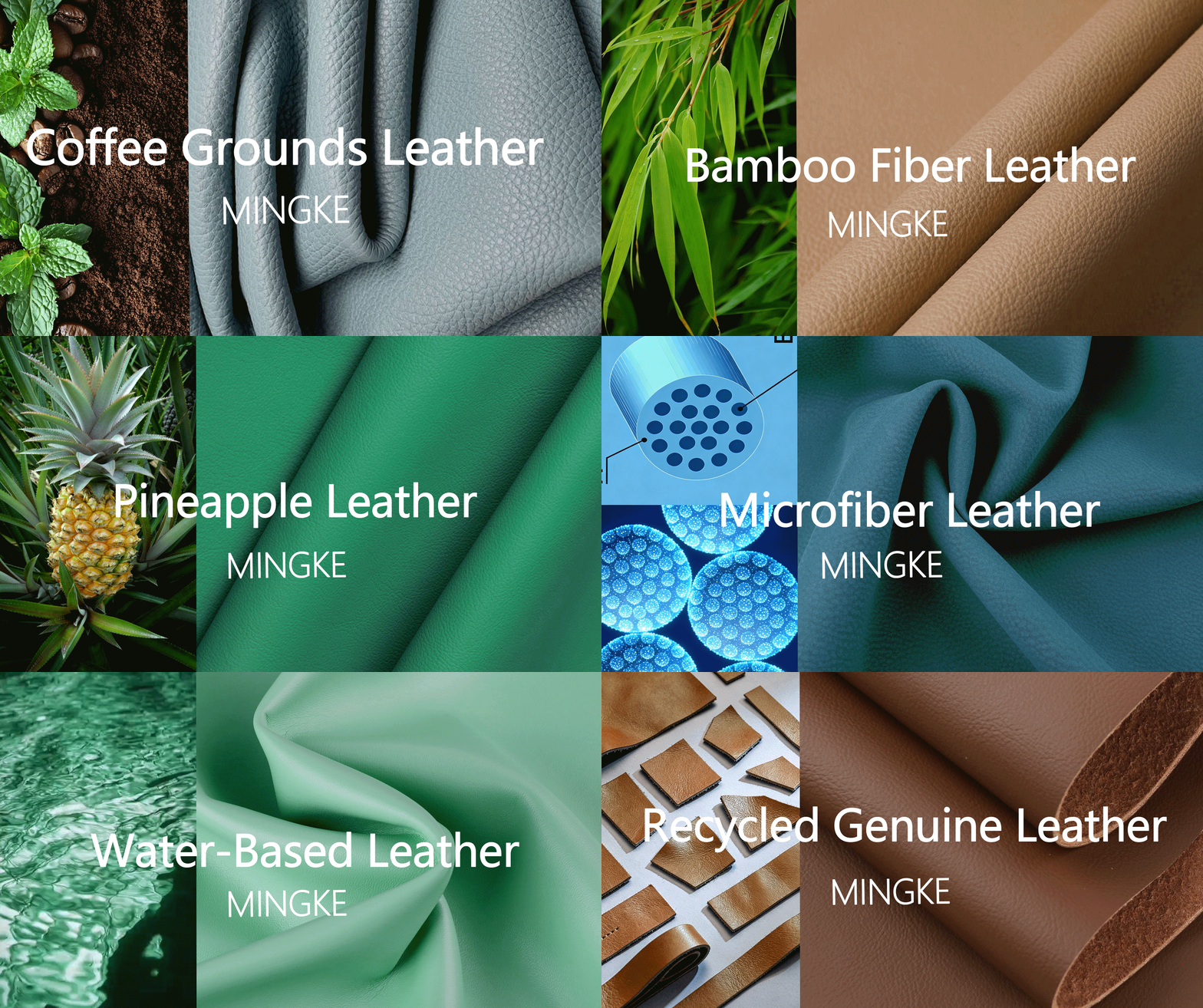
Our bio-based materials are made from renewable plant sources — low-carbon, low-odor, and gentle to the touch. They support brand-exclusive customization in texture, hand feel, and function, and suit apparel, bags, home furnishings, packaging, and outdoor products.
We also offer a complete range of synthetic leather and standard fabrics with stable properties, excellent color fastness, and reliable abrasion and tear resistance. Textures, thicknesses, performance, and finishes can be tailored to each brand's requirements.

Product Applications


