
Comparing PVC and PU Synthetic Leather for Purchase
A Practical Comparison for Material Buyers
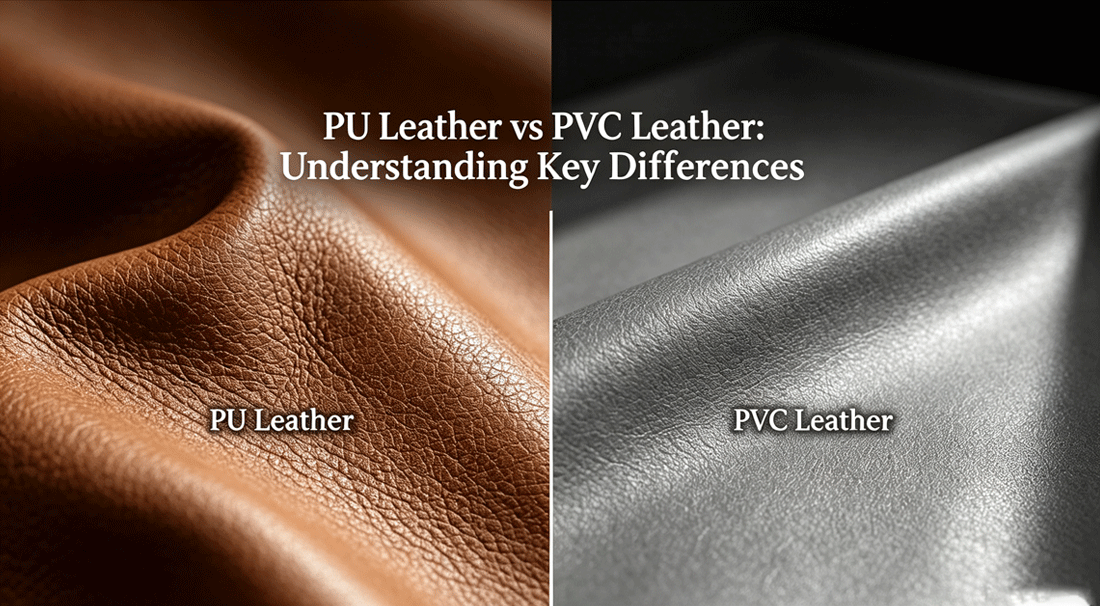
PVC vs PU Synthetic Leather: Key Differences for BuyersIntroduction
PVC and PU synthetic leather are widely used materials for bags, footwear, furniture and automotive interiors. Many buyers judge materials only by the simple label “PU” or “PVC”, without knowing that two completely different types of PU leather exist on the market. This misunderstanding often causes huge differences in hand feel, texture, durability and final cost. This professional buying guide clearly explains their structural differences, performance gaps and suitable applications to help buyers avoid sample mismatches and wrong material selections.
Core Structural Differences
1. Wet-base PU Leather (High-End Grade)
Wet-base PU is manufactured with a standard two-step process: wet base forming + dry surface finishing.A thick, sponge-like, microporous base layer is formed through wet coagulation. This porous structure is the key reason why high-end PU leather is soft, full, elastic and breathable. After the base blank is completed, a dry transfer process is used to attach the surface PU film, emboss grain, adjust color and create matte or glossy finishes.
Core advantages: True breathable structure, full leather-like hand feel, excellent flexibility, strong folding resistance and high durability. It is recognized as premium synthetic leather for high-end products.
2. Dry-Transfer PU Leather (Economic Grade for Bags & Footwear)
Dry-transfer PU is the most common economical PU material for mass-market shoes and bags.It is produced by coating color slurry on release paper, semi-drying, applying adhesive resin, and laminating directly onto the base fabric. The PU film is transferred after peeling off the release paper.This material has no wet porous base layer at all.
Core advantages: Affordable price, clear surface grain, stable quality for mass production.Limitations: Thin and flat hand feel, obvious plastic touch, non-breathable, poorer folding recovery compared with wet-base PU.
3. PVC Synthetic Leather
PVC leather is made by coating mixed PVC resin and plasticizer directly on base fabric and embossing patterns.There is no sponge microporous base structure. Even foamed PVC only forms simple physical bubbles without breathable properties.
Core advantages: Lowest cost, excellent waterproof performance and outstanding hydrolysis resistance, stable for long-term outdoor use.Limitations: Stiff hand feel, easy to harden in low temperatures, completely non-breathable.
Hand Feel & Grade Gap
Wet-base PU: Sponge base layer provides cushioning and fullness, delivering the most genuine leather-like texture among synthetic leathers.
Dry-transfer PU: Similar leather appearance but flat and thin without soft padding, resulting in obvious plastic feeling.
PVC: Rigid and stiff, heavy plastic touch, no natural leather softness.
Performance ComparisonBreathability & Moisture Permeability
Only wet-base PU offers real breathability and moisture permeability.Dry-transfer PU and PVC have fully sealed structures. Long-time contact easily causes sweat accumulation and odor.
Flex Resistance & Durability
Wet-base PU has excellent bending recovery, resisting cracks and permanent creases after repeated folding.Dry-transfer PU and PVC are more likely to turn white, wrinkle or break under frequent bending.
Weather & Hydrolysis Performance
PVC features superior waterproof and hydrolysis resistance, ideal for outdoor and wet environments.Wet-base PU is more suitable for indoor, skin-contact and high-comfort scenarios.
Cost & Market Positioning
PVC: Lowest production cost, perfect for large-volume budget orders requiring waterproof stability.
Dry-transfer PU: Mid-cost, widely used for standard bags, shoes and daily consumer goods.
Wet-base PU: 30%–50% higher cost than PVC, positioned for premium products requiring high texture and durability.
Application Scenarios
Wet-base PU: Luxury bags, high-end footwear, automotive interiors, premium furniture and high-quality upholstery.
Dry-transfer PU: Mass-market casual shoes, daily bags and general synthetic leather products.
PVC: Outdoor products, waterproof covers, budget bags and moisture-resistant items.
For customized premium vintage textures, view our Oil Wax Crack Leather MK26225, designed for high-end apparel and automotive projects.
Conclusion
PVC, dry-transfer PU and wet-base PU serve completely different market positioning and usage needs.Budget orders and outdoor waterproof projects can choose PVC or dry-transfer PU.For high-end, skin-friendly, comfortable and durable products, wet-base PU with a porous base layer is the optimal choice.
Professional buyers never judge quality only by the “PU” label. Confirming whether the material contains a wet porous base layer is the key to avoiding sample deviation.
FAQ
Q: Why do two PU materials show completely different hand feel and quality?
A: The decisive difference is the base layer. Wet-base PU has a sponge microporous base layer for full leather-like softness. Dry-transfer PU has only a thin PU film without a base layer, resulting in flat, plastic hand feel.
Q: Which material is better for shoes and bags?
A: Dry-transfer PU is suitable for cost-effective mass styles. Wet-base PU is recommended for high-end products requiring soft touch, comfort and long service life.
Q: Can you provide samples and official documents?
A: Yes. MINGKE provides free material samples, technical data sheets and full standard compliance certificates.
Q: Is synthetic leather customizable?
A: Yes. Texture, thickness, color and surface finish can be fully customized according to project requirements.

Product Applications


